The Scoreable Screen: Preparing a Pre-Recorded Pitch for UK Competition Judges

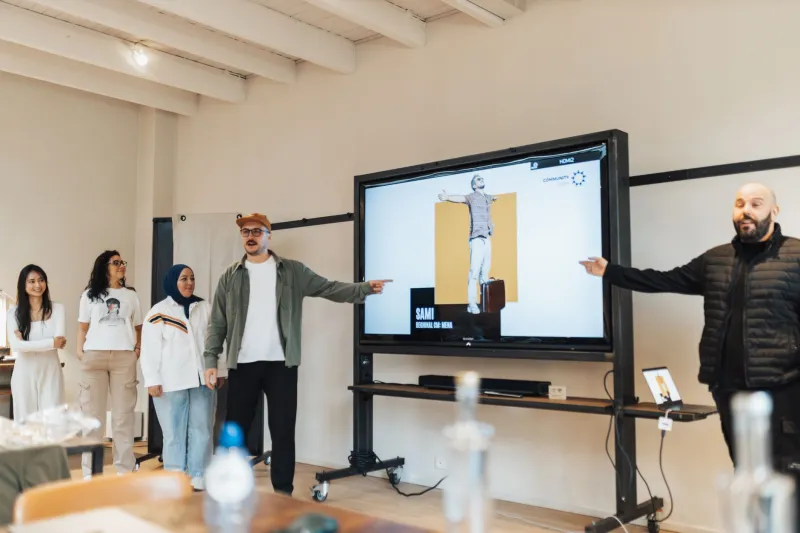
Photo: Musicbaby79, CC BY-SA 4.0, via Wikimedia Commons
The asynchronous video round has become a familiar gate on the UK competition circuit. Before a founder meets a judge, answers a question or reads a room, a pre-recorded file must carry the proposition on its own. That changes the nature of the task. The video is not an audition for a television programme, nor a cinematic trailer for the company. It is a scoring instrument: a short, legible piece of evidence that a reviewer, possibly watching a batch of entries after a long day, can assess against a published set of criteria.
The File Is a Scoring Instrument
Judges reviewing asynchronous submissions are usually not watching for entertainment. They are looking for reasons to advance a company and reasons to set it aside. The practical constraint is attention. A reviewer may open a video with a scorecard in hand, watch the first twenty seconds, check whether the core claim is clear, then decide how closely to listen. This is not cynicism; it is the ordinary consequence of reviewing many applications within a fixed window.
For founders, the implication is straightforward. The opening must establish what the company does, for whom and with what evidence of progress. Company history can wait. A long preamble about incorporation, founder biographies and the broader market landscape may be accurate, but it delays the moment at which a judge can begin scoring. In a three-minute format, delay is expensive.
Write for the Reviewer, Not the Room
A live pitch can rely on eye contact, audience reaction and the ability to adjust pace. A recorded video cannot. The script therefore needs to do more of the structural work. It should map explicitly to the competition’s published criteria, but without reciting them as a checklist. If the criteria reward customer validation, the video should show customer validation. If they reward team capability, the founder should explain why this team is unusually suited to the problem. If they reward scalability, the route to growth should be visible rather than implied.
The tone should be formal enough for a competition and natural enough to be credible. A script read word for word from a screen often sounds flat. A better approach is to write a full draft, reduce it to a sequence of cue points, and rehearse until the language is familiar. The founder should sound like someone explaining the business to a serious investor, not like someone performing a monologue.
A Three-Minute Architecture
There is no single correct structure, but a reliable pattern is to move from claim to evidence to route. In the first twenty to thirty seconds, state the problem, the customer and the company’s proposition. Avoid a slow build. A judge should be able to complete the sentence ‘This company does X for Y’ before the first minute.
The middle section should carry the proof. Traction, pilot results, letters of intent, revenue, user retention, regulatory progress or technical validation should appear early enough to be noticed. Founders often bury their strongest material behind a detailed explanation of the problem. That order suits a lecture; it does not suit a scored review. The final section should explain how the business grows from the current position, what the competition prize would enable and why the team can deliver it. The ask should be specific, but it should not dominate the video. Judges are assessing the business first and the use of funds second.
Audio Before Aesthetics
Poor audio is one of the most common avoidable failures in asynchronous rounds. A viewer will forgive a modest camera, a plain background and unremarkable lighting. A viewer will not forgive echo, traffic noise, a laptop fan or a microphone that sounds as though it is in another room. The simplest improvement is usually a wired or wireless lavalier microphone, a quiet room with soft furnishings and a test recording played back through ordinary laptop speakers.
Overproduction carries its own risk. A highly stylised video with fast cuts, stock footage and dramatic music can make a small company look as though it is spending on presentation rather than product. It can also obscure the founder. The judge needs to see and hear a credible person making a credible claim. Clean framing, steady light, a neutral background and clear sound are sufficient. The video should look professional, not expensive.
Captions Are Part of the Pitch
Captions are not an accessibility afterthought. Many reviewers watch submissions with sound off, at least initially, or in environments where audio is inconvenient. Accurate captions allow the core argument to survive that first pass. They also signal care. Auto-generated captions should be checked and corrected, especially for product names, technical terms and UK spelling. A caption file that misrenders the company’s own name undermines confidence before the judge has reached the traction slide.
Common Failure Modes
Three failures recur. The first is the buried traction problem: the strongest evidence appears at two minutes thirty, by which point the reviewer may already have formed a view. The second is the overproduced pitch: the production values overwhelm the substance, and the founder becomes a narrator rather than an operator. The third is the criteria mismatch: the video is well made but answers questions the judges did not ask. Each can be corrected at the script stage rather than the edit stage.
A 2026 Pre-Submission Checklist
- Confirm the 2026 competition’s file format, maximum length, resolution and upload deadline.
- Re-read the scoring criteria and mark where each one is evidenced in the script.
- Open with the proposition, customer and strongest proof point within the first thirty seconds.
- Place traction before market context if the criteria reward validation.
- Use one idea per section and avoid stacking multiple claims into a single sentence.
- Record a test clip and play it back on laptop speakers, not only headphones.
- Check for echo, background hum, fan noise and sudden volume changes.
- Frame the founder at eye level with steady, soft lighting and a plain background.
- Add checked captions and confirm that key terms and the company name are correct.
- Watch the final file end to end with the sound off, then with the sound on.
- Ask someone unfamiliar with the business to state the proposition after one viewing.
- Keep the file name clear and professional; avoid final_final versions.
After the Upload
The asynchronous round rewards preparation rather than performance. A founder who writes for the reviewer, front-loads evidence, protects the audio and respects the criteria is not gaming the format. They are recognising that a recorded video is a different instrument from a live pitch. It must be concise, legible and credible on a small screen. In the 2026 UK competition circuit, the founders who survive the three-minute filter are often not the most polished speakers. They are the ones who make the judge’s scoring task easier.