The No That Pays: Turning UK Competition Rejection Into a Pre-Seed Readiness Audit
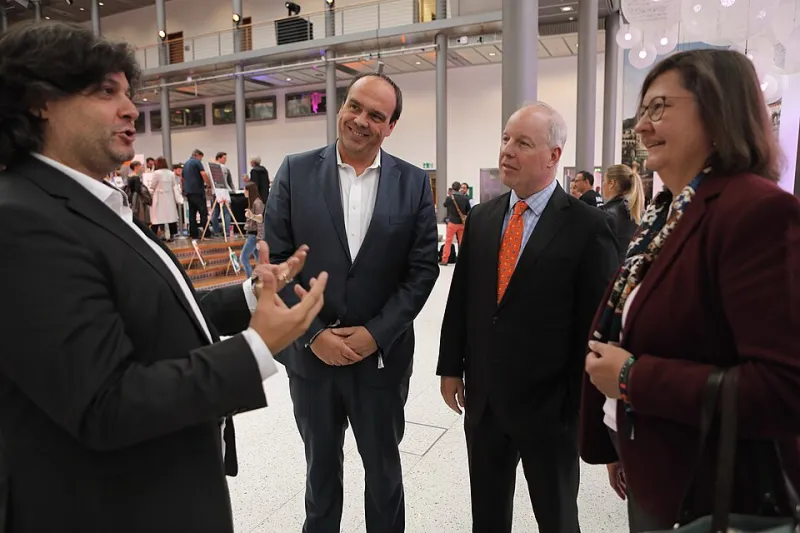
Photo: usbotschaftberlin, Public domain, via Wikimedia Commons
The email lands a fortnight after pitch night: three paragraphs, a line about a highly competitive field, and a polite invitation to apply again next year. For many UK founders, that message marks the end of a competition. It should mark the beginning of a fundraise.
A competition loss is one of the few occasions when an early-stage company receives structured external scrutiny at no cost. Investors rarely explain a pass in detail. Judges, by contrast, score against a published rubric, watch a live pitch and frequently leave written comments. Treated properly, that material amounts to a pre-seed readiness audit — one nobody had to commission.
A Loss Is Only an Audit If You Commission It
Most founders read the outcome and skip the evidence. The scorecard is filed away, the comments stay unread, and a time-sensitive asset expires quietly. Judges see dozens of companies in a single cycle and remember the strongest submissions for weeks, not months.
The practical move is to request feedback within ten working days of the result, in writing, and to ask three precise questions: which part of the submission was weakest, what evidence would have changed the score, and whether the judge would take a fifteen-minute call. Organisers vary in how much they can share, but well-run programmes — particularly those backed by universities, regional growth hubs and corporate sponsors — usually accommodate a short follow-up.
Three Fault Lines That Judges and Investors Share
Across the UK circuit, the same weaknesses recur in losing applications, and they map closely onto what a seed investor probes in a first meeting.
Traction without proof. A founder describes a strong pipeline. A judge asks how many conversations, over what period, with what conversion. The distance between those two statements is the distance between a competition loss and a term sheet.
A team narrative that lists rather than argues. Advisers and logos are not a narrative. The question is why this group, with this history, is the credible team to solve this problem now. Judges score it explicitly; investors infer it from everything else.
Market sizing that starts at the top. Top-down figures invite scepticism. A bottom-up calculation — customers, price, achievable share in year three — is less impressive on a slide and far more persuasive in a room.
Reading the Scorecard as an Investor Would
Scorecards are usually weighted, and founders tend to fixate on the total. Resist that. Look instead at the category where you scored lowest relative to the eventual winners, then ask whether the gap concerned evidence or framing.
Evidence gaps demand work: customer interviews, a paid pilot, a signed letter of intent. Framing gaps demand editing: the same facts, ordered differently. Founders routinely confuse the two and spend three months building a feature when a rewritten slide would have closed the distance. Comparing notes with founders who placed is also worthwhile; most are willing to describe the shape of their submission, and the comparison is often more instructive than the comments you received.
What Winning Can Hide
Victories are validating and occasionally misleading. A competition win measures performance against a rubric on a single evening; it does not measure whether a business can survive a procurement cycle or a hiring freeze. Several founders describe a post-win lull: the prize money arrived, the inbound interest faded, and the underlying evidence gaps remained unaddressed. Defeat is uncomfortable, but it tends to surface those gaps while there is still time to act.
From Scorecard to Fundraise Checklist
A simple conversion works. Sort every judge comment into one of three columns: prove, clarify or drop. Prove items become the next quarter of commercial work. Clarify items become slide edits and pitch rehearsal notes. Drop items are the claims you should stop making because you cannot support them.
The result looks remarkably like an investor's diligence list: cohort retention, unit economics, contract status, regulatory position and the credibility of the market model. Founders who complete this exercise before opening a round spend less time defending and more time choosing between offers.
A Sixty-Day Sequence
Weeks one and two: request feedback, gather scorecards, book two judge calls. Weeks three to six: close the largest evidence gap the exercise identified. Weeks seven and eight: rebuild the deck around the corrected narrative and test it on someone who has never seen the business. Week nine: revisit the competition. Many programmes offer alumni support, introductions or a fast track into an accelerator, and those benefits often outlast the cash.
None of this depends on the prize you did not win. It depends on the discipline to read the comments you did receive. In a funding climate where pre-seed investors are openly cautious, a documented response to external criticism is itself a signal — evidence that a team can absorb a no and convert it into a stronger yes.
The founders who benefit most from rejection are rarely the ones who simply reapply. They are the ones who treat the judges as an unpaid diligence committee and act on the minutes.